


From Foundation to Finish: Building the Future of MSP Airport’s Terminal 2
Morcon recently joined project partners for a behind-the-scenes tour of the Terminal 2 Expansion project at Minneapolis–Saint Paul International Airport. The experience offered a firsthand look at the scale, complexity, and craftsmanship required to deliver one of Minnesota’s most significant aviation projects. Here’s a closer look at the work currently underway and the teams helping bring the expansion to life.
Project by the Numbers
- 10,248 cubic yards of concrete placed
- 5,596 cubic yards self-performed by Morcon
- 50+ miles of wiring installed
- 35,000 square feet of terrazzo flooring
- 70–80 workers onsite daily
- 6 air handling units weighing up to 39,000 pounds
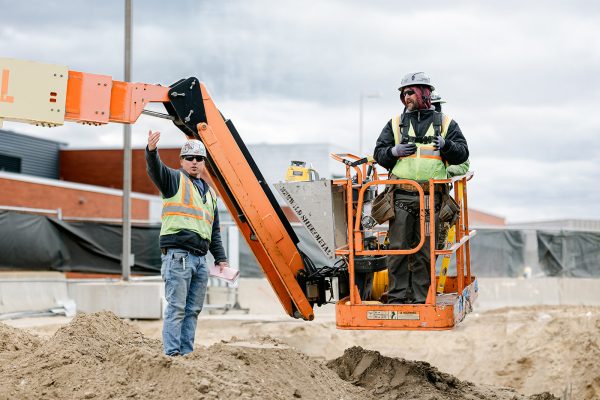
The ongoing expansion will add new gates, enhanced passenger amenities, expanded concessions, and critical infrastructure improvements designed to support the airport’s continued growth for decades to come. While travelers will eventually experience the finished spaces, the work happening behind construction walls today represents thousands of coordinated tasks, skilled tradespeople, and countless hours of planning.
Construction is progressing simultaneously across multiple areas of the project, with crews building everything from the infrastructure hidden beneath the surface to the finishes passengers will walk on, touch, and experience.
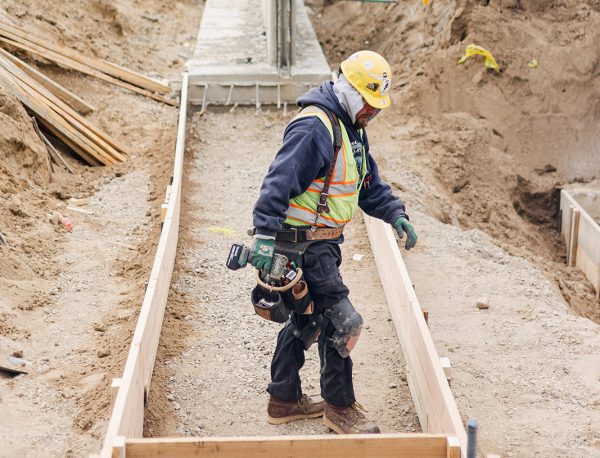
Building Below the Surface
Every major expansion begins with work most people will never see.
Before the terminal’s walls, ceilings, and passenger spaces can take shape, crews have been completing extensive below-grade work to support the building’s foundations, utilities, and infrastructure systems. These early phases required careful coordination among multiple trades and have established the framework that allows every subsequent phase of construction to move forward.
Many of the project’s most significant sustainability features also begin below the surface. The expansion is designed to support LEED Gold certification and incorporates systems such as geothermal heating and cooling, rainwater harvesting and reuse, solar power generation, and an expanded green roof. Together, these elements are intended to reduce energy consumption, conserve water, and improve the long-term environmental performance of the facility.
One of the largest pieces of sustainability infrastructure installed as part of the project is the rainwater collection system. The large underground storage tank—one of the project’s most significant crane picks—will capture and store rainwater for reuse within the facility, reducing reliance on potable water while supporting the airport’s broader sustainability goals.
Like much of the infrastructure that keeps an airport operating, these systems will remain largely hidden once construction is complete. Yet they are among the most critical components of the project, supporting everything from building operations and passenger comfort to long-term durability and performance.
Self-Performing Critical Concrete Work
As construction moves from below-grade infrastructure into structural work, concrete became a major focus across the project. To date, crews have placed more than 10,248 cubic yards of concrete throughout the expansion. Morcon has self-performed approximately 5,596 cubic yards of that work—more than half of the total concrete placed on the project.
From structural elements and equipment pads to other critical concrete components, this self-performed work has allowed Morcon to play an active role in advancing key phases of construction while maintaining close coordination with project partners across the site.
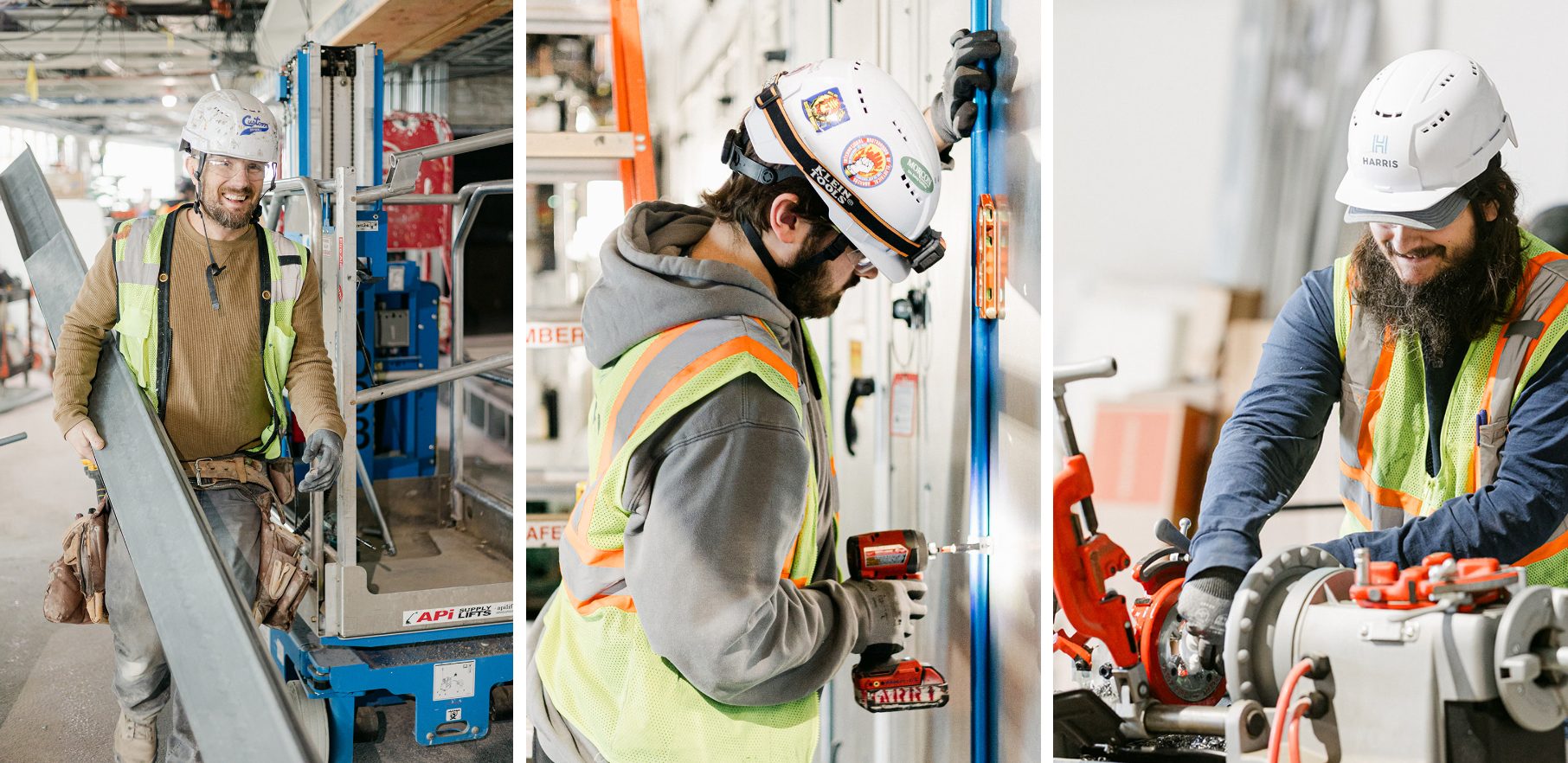
Bringing the Building to Life
With the majority of foundational work complete, attention has shifted to the systems and finishes that are transforming the expansion into a functioning terminal.
RJ Mechanical has completed much of the mechanical rough-in work and continues welding and installing piping associated with the facility’s six air handling units, which range in weight from 9,000 to 39,000 pounds. Hunt Electric crews have installed more than 50 miles of wiring to support everything from security systems and baggage handling infrastructure to building automation controls, solar systems, auto-dimming glass, passenger communications, and assisted-listening systems. Harris is integrating the building automation and controls systems that will help monitor and optimize facility performance for years to come.
At the same time, the building envelope continues to take shape. WL Hall is installing the Kawneer 1600 Wall System 1, a stick-built, pressure-glazed curtain wall system that will bring natural daylight deep into the terminal while creating a durable, high-performance exterior enclosure. Berwald Roofing & Sheet Metal continues advancing roofing and exterior weatherproofing systems that will help protect the facility from Minnesota’s challenging climate.
Inside the building, Custom Drywall is framing and finishing walls and soffits, Innovative Surfaces is installing durable Cambria quartz wall panels in restroom facilities, and Advanced Terrazzo is placing approximately 35,000 square feet of terrazzo flooring throughout the concourse. J. Benson Construction has been installing the cross-laminated timber and glulam wood ceiling systems — one of the terminal’s most defining architectural features.
Together, these trades are transforming the project from a construction site into a passenger-focused facility designed to serve millions of travelers each year.
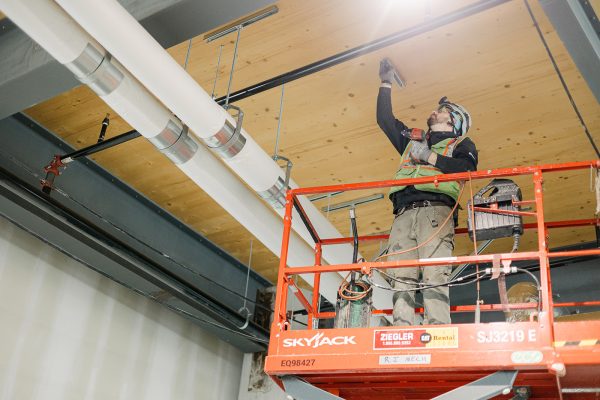
Creating the Passenger Experience
Beyond the infrastructure, systems, and finishes, the Terminal 2 Expansion has been designed with the traveler experience in mind.
One of the most distinctive architectural features taking shape is the extensive use of cross-laminated timber and glulam wood-beamed ceilings in the passenger holding areas. Installed by J. Benson Construction, and designed by Miller Dunwiddie, these natural wood elements introduce warmth, texture, and a strong sense of place while creating a welcoming environment for travelers. Beyond their visual appeal, the mass timber components also support the project’s broader sustainability goals and reflect the airport’s commitment to innovative, environmentally conscious design.
The expansion also includes a variety of passenger-focused amenities designed to improve comfort, accessibility, and convenience. Travelers will benefit from new concessions, including a restaurant, coffee shop, and gift shop, along with dedicated spaces such as a sensory room and quiet room that support a wider range of traveler needs.
Throughout the terminal, natural light, thoughtful materials, public art, and flexible gathering spaces have been carefully integrated to create an environment that feels both functional and inviting. The result is a terminal experience designed not only to move passengers efficiently, but to make their journey more comfortable and enjoyable.
While many of the project’s sustainability features—including geothermal heating and cooling, rainwater reuse, solar power generation, and an expanded green roof (designed by Kimley-Horn)—operate behind the scenes, they contribute to a facility that is designed to serve both today’s travelers and future generations.
Coordinating Construction Inside an Active Airport
Perhaps the most impressive aspect of the Terminal 2 expansion is not any single trade or construction activity—it’s the level of coordination required to deliver the work while airport operations continue uninterrupted.
An average of 70 to 80 workers are onsite each day, with dozens of trades operating simultaneously throughout the project. Every footing, conduit run, pipe installation, wall assembly, and finish element must be carefully sequenced to ensure work progresses safely and efficiently.
While the expansion area is currently outside the secured terminal environment, critical airport utility shutdowns still require extensive coordination between Hunt Electric, RJ Mechanical, H+U Construction, and the Metropolitan Airports Commission (MAC). Certain activities on the existing terminal side require overnight work, though those operations have remained relatively limited.
The project’s largest crane picks included major structural steel framing, installation of a rainwater collection tank, and placement of several oversized air handling units. One of the ongoing logistical challenges has been finding sufficient space to stage materials while maintaining active construction operations across the site.
Despite the complexity of the work, the project has maintained an excellent safety record, with no lost-time incidents.
Building inside one of the region’s busiest transportation hubs presents unique challenges, but it also highlights the collaboration, planning, and craftsmanship required to deliver a project of this scale.
Looking Ahead
While travelers may currently see construction walls and temporary conditions, behind those walls a remarkable transformation is taking place. From below-grade infrastructure to sophisticated building systems (MEP design by Michaud Cooley Erickson), architectural finishes, and passenger amenities, every phase of work brings the project one step closer to completion.
The Terminal 2 Expansion showcases the expertise, coordination, and craftsmanship required to deliver complex construction in one of Minnesota’s busiest transportation hubs—and Morcon is proud to be part of the team helping build it.


